
Exhibition
CONTRADICTIONS
VASIL ABADJIEV
1 – 17 October 2026
“Contradictions” is an exhibition about the human being as an unfinished and constantly changing entity.
A human being cannot be regarded as a unified, complete, and unchanging entity, since identity is formed through a process of continuous change and interaction between internally conflicting emotions and desires.
We are a collection of movements between opposites — between desire and disgust, closeness and distance, attraction and repulsion, fear and courage, solitude and the need for another person. Our inner life does not unfold despite these contradictions; rather, it unfolds precisely through them.
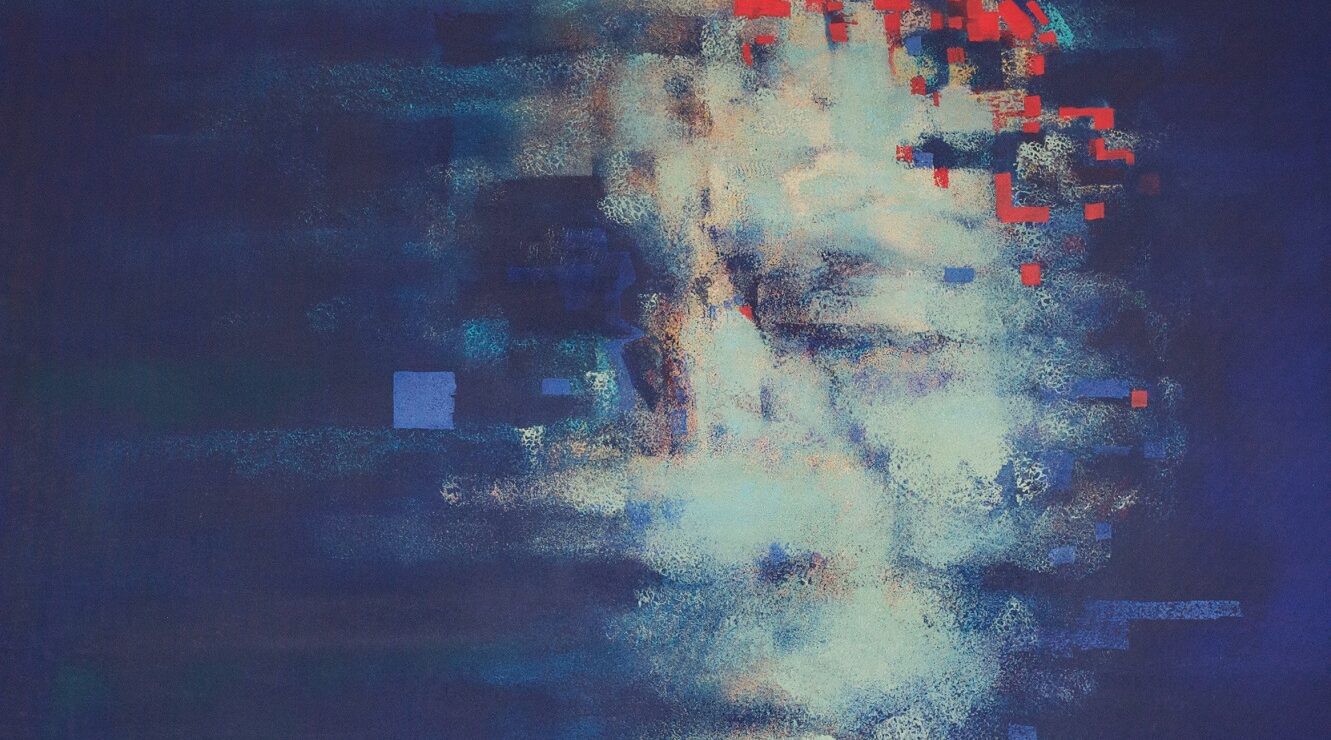
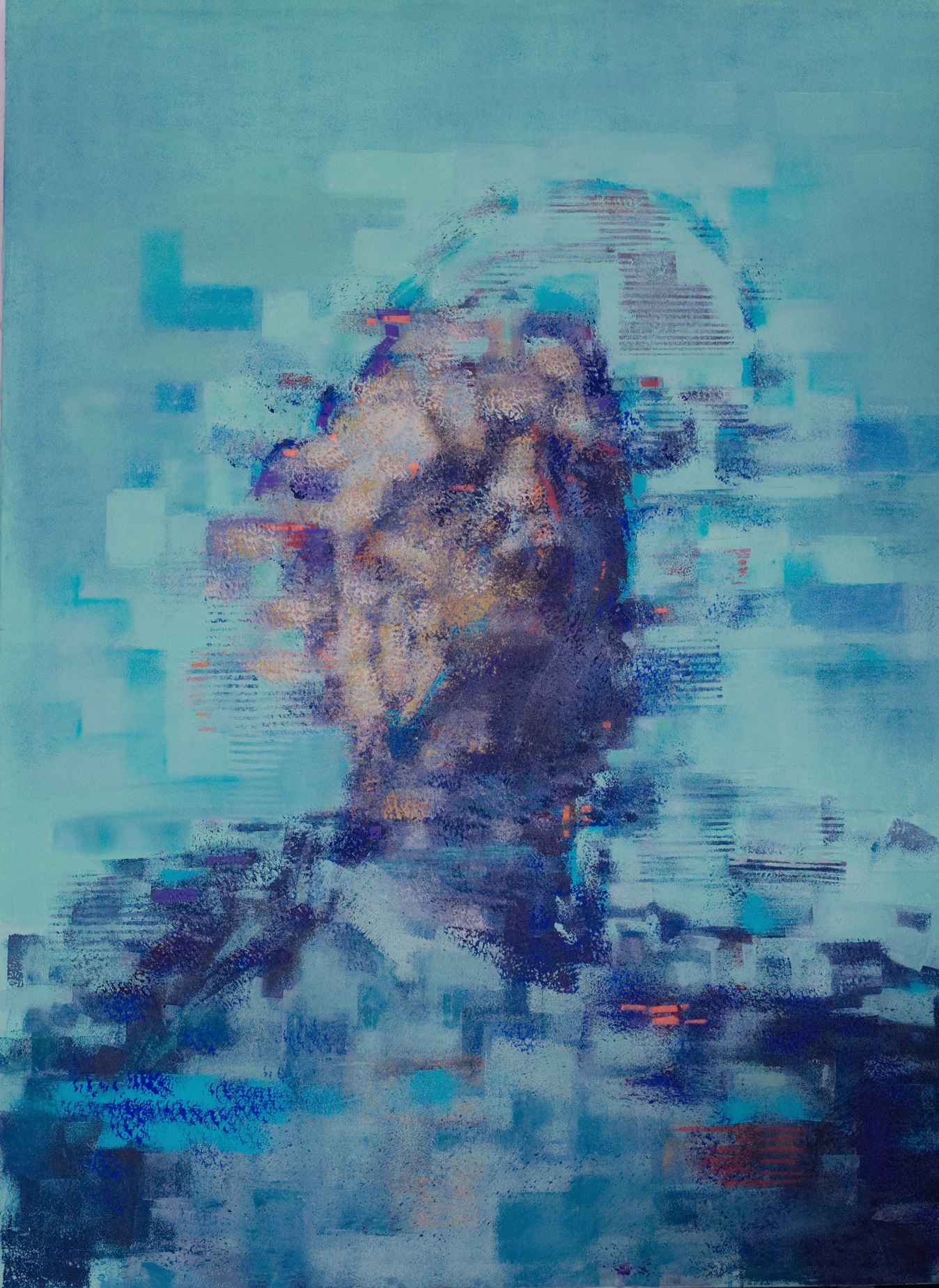
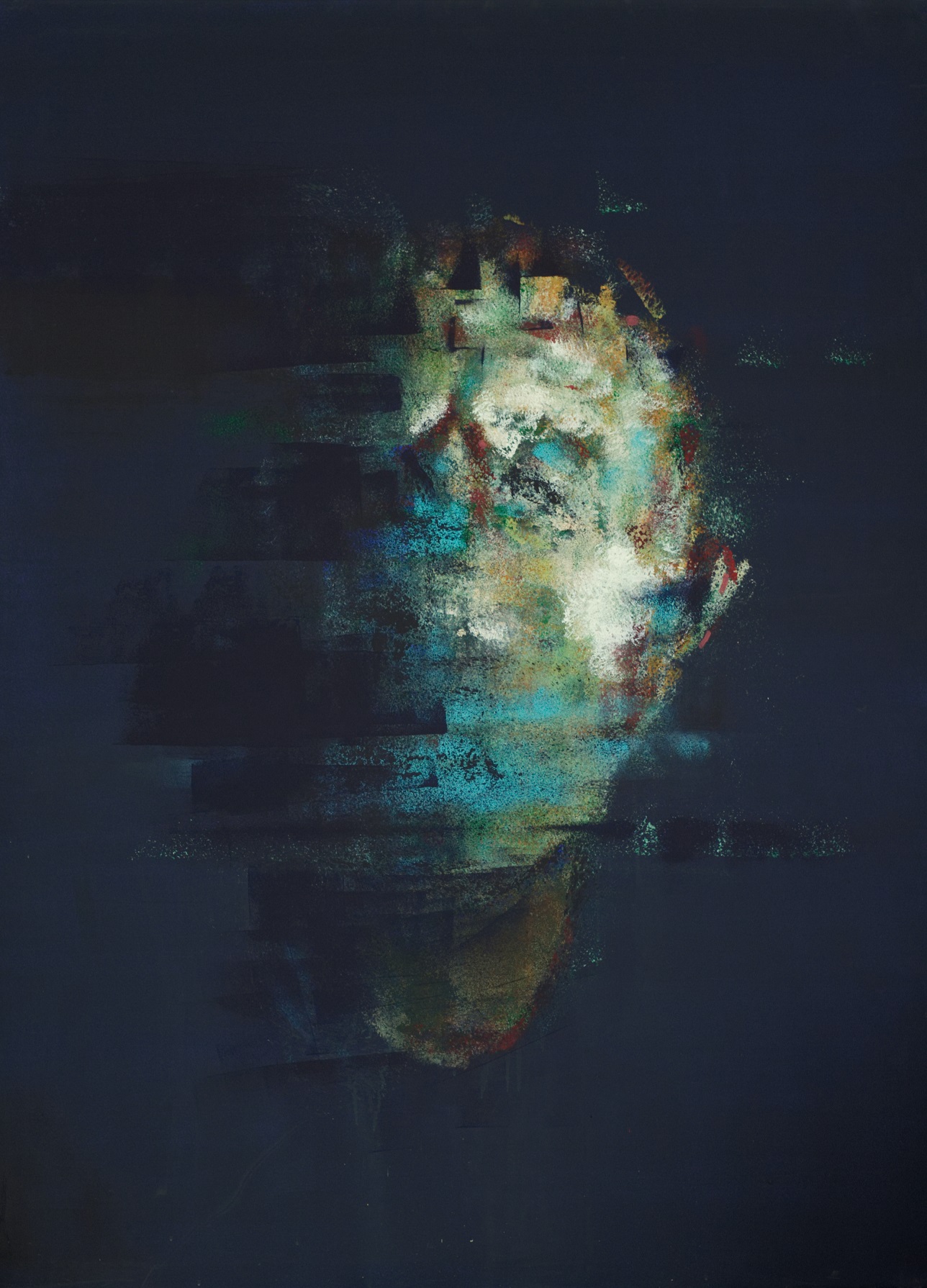
Portraiture is the primary field of my exploration because, in my view, the face is a boundary between the visible and the invisible. It is where what a person allows to be seen meets what they attempt to conceal. The human face can simultaneously express desire and fear, tenderness and aggression, hope and despair.
In my exploration, the face is no longer a portrait of a particular individual, but a space of inner experience. It fragments between the gaze, which seems to close in on itself, and the mouth, which remains open in a silent scream. Colour does not describe reality but follows emotion: red appears as tension and pain, blue as withdrawal and distance, while areas of light suggest an attempt at the disappearance of identity itself.
The smile here is ambiguous. It can be a gesture expressing a desire for contact, but it can also be a mask behind which anxiety is concealed. It is precisely these contradictions that transform the face into a psychological image, behind which lies a dramatic conflict between desire and disgust, compassion and fear, love and hatred, acceptance and rejection.
I have not sought physical resemblance, but rather the traces of feelings generated by inner contradictions.
The portrait in my exhibition does not seek to “fix” identity. I try to capture the moment of inner displacement — the instant when a person finds themselves between two or more emotional states.
There are human states that can be simultaneously opposed and interconnected. Each of them changes the way we see others, as well as the way we see ourselves and the world.
The deconstruction of the portrait image here is a means of revealing the invisible.
The more the face loses its photographic or realistic definition, the more powerfully the true emotional experience emerges.
Desire and disgust are two opposing yet interconnected driving forces that shape human experience and behaviour.
Desire directs us and draws us toward the world and toward others, but at the same time it can turn the other person into an object of possession.
Disgust creates the opposite movement: the need to separate ourselves, to establish a boundary, to say “no.”
Anxiety arises between the two: in the uncertainty of whether to approach or withdraw, whether to trust or protect ourselves.
Compassion offers another possibility. It implies the ability to move beyond our own perspective and recognise another person’s pain as our own.
And love poses the most difficult question: can we remain close to another person without turning them into our possession?
In the Śrīmad-Bhāgavatam, love is presented as selfless and unwavering devotion. In the Bhagavad Gita, it is associated with compassion, the renunciation of selfish possession, and the ability to see a living being beyond our own desires.
For Schopenhauer, compassion becomes a possibility for breaking through the boundary of the egoistic “I” — a moment in which the boundary between “self” and “other” begins to dissolve.
These five perspectives — desire, disgust, love, anxiety, and compassion — are not presented here as a system of ready-made answers. They form part of a broader question about the possibility of moving beyond oneself without ceasing to be oneself.
This is precisely where the paradox lies. We need others, yet we fear becoming dependent on them. We desire freedom, yet we fear loneliness.
We want to be seen, yet we are afraid to reveal ourselves.
We long for love, yet we often transform it into a desire for possession.
The exhibition “Contradictions” does not resolve these conflicts but leaves them open.
Because perhaps human identity is not found on one side or the other of an opposition, but in the very space between its two poles.
It is within this space that the portrait emerges.
Not as a definitive image of the human being, but as a trace of their inner movement.
Because perhaps the deepest contradiction is not between the human being and the world, but within the human being itself.
Vasil Abadjiev

 финансиран по програма „Едногодишен грант 2021“ на Национален фонд „Култура“ (НФК)